Sitting Less Isn’t the Entire Answer: Why Position Changes Matter
Sitting Less Isn’t the Entire Answer: Why Position Changes Matter
At Strive Physiotherapy & Sports Medicine, we’ve been having more conversations with patients about standing desks.
Many people are looking for solutions to neck pain, back pain, and stiffness associated with desk-based work. While standing desks can bea useful tool, they’re often misunderstood as a complete solution.
The reality is that the body generally benefits from movement and variety, not simply swapping one static position for another.
Are Standing Desks Better?
Standing desks can help reduce the amount of time spent sitting throughout the day. For some individuals, they may temporarily reduce feelings of stiffness or discomfort.
However, standing for prolonged periods can create its own challenges, including:
- Leg fatigue
- Foot discomfort
- Low back soreness
- Reduced concentration
The goal isn’t necessarily to stand all day. The goal is to avoid remaining in one position for too long.
The Best Position Is Your Next Position
One of the most valuable benefits of a sit-to-stand desk is the opportunity to change positions throughout the day.
Consider alternating between:
- Sitting
- Standing
- Walking
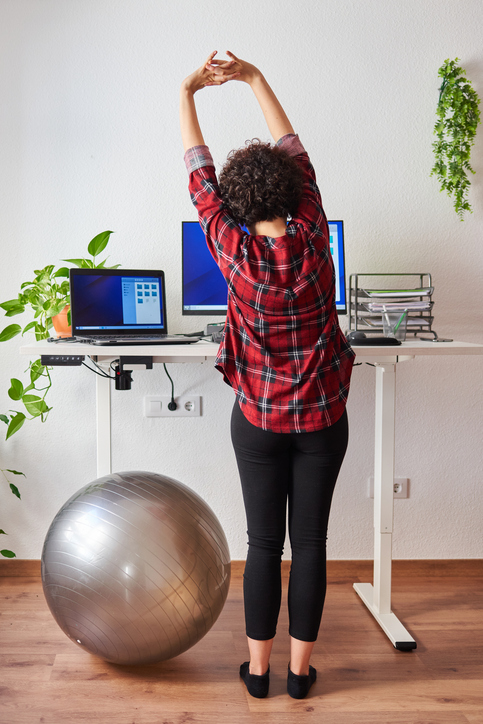
- Stretching
- Brief movement breaks
These position changes encourage circulation, reduce stiffness, and allow different muscle groups to share the workload.
Practical Strategies for Desk Workers
Small changes can make a meaningful difference:
- Alternate between sitting and standing every 30-60 minutes
- Take short movement breaks throughout the day
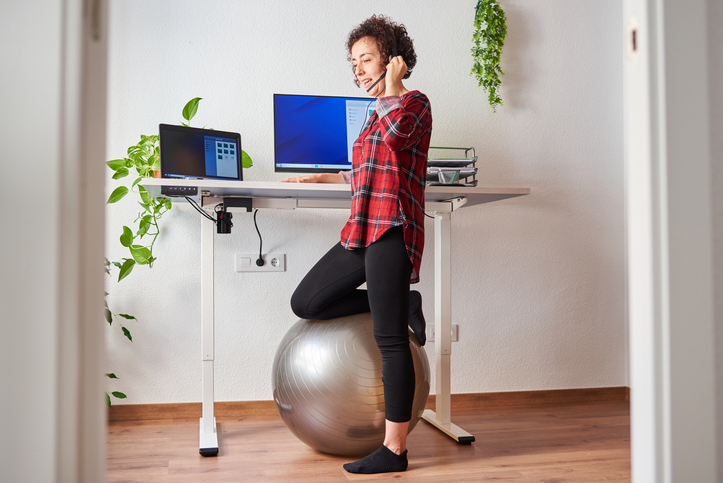
- Walk during phone calls when possible
- Change tasks periodically
- Include regular exercise outside of work hours
When Should You Seek Help?
If you’re experiencing persistent:
- Neck pain
- Back pain
- Shoulder tension
- Headaches
- Discomfort while working
an assessment may help identify contributing factors beyond workstation setup alone.
Ready to Move More Comfortably?
At Strive, we help individuals understand the factors contributing to pain and stiffness and develop practical strategies that fit their daily lives.
Book a free 10-minute Ask a Physio consultation to find out if Physio is the right next step for you!